

Teacher Clarity
Doug and Nancy share how clear learning intentions, aligned tasks, and meaningful assessments deepen student learning and elevate instructional practice.
Teacher Clarity: Empowering Educators
to Improve Student Learning
Teacher Clarity refers to a teacher’s ability to clearly and consistently communicate learning intentions, success criteria, and design instructional processes that make learning visible, intentional, and understandable for students.
What is Teacher Clarity?

Teacher Clarity is the intentional practice of making learning transparent for students—ensuring they understand what they are learning, why it matters, and how they will know they’ve learned it. Grounded in Visible Learning research, Teacher Clarity is one of the highest‑impact influences on student achievement because it strengthens focus, engagement, and ownership of learning.
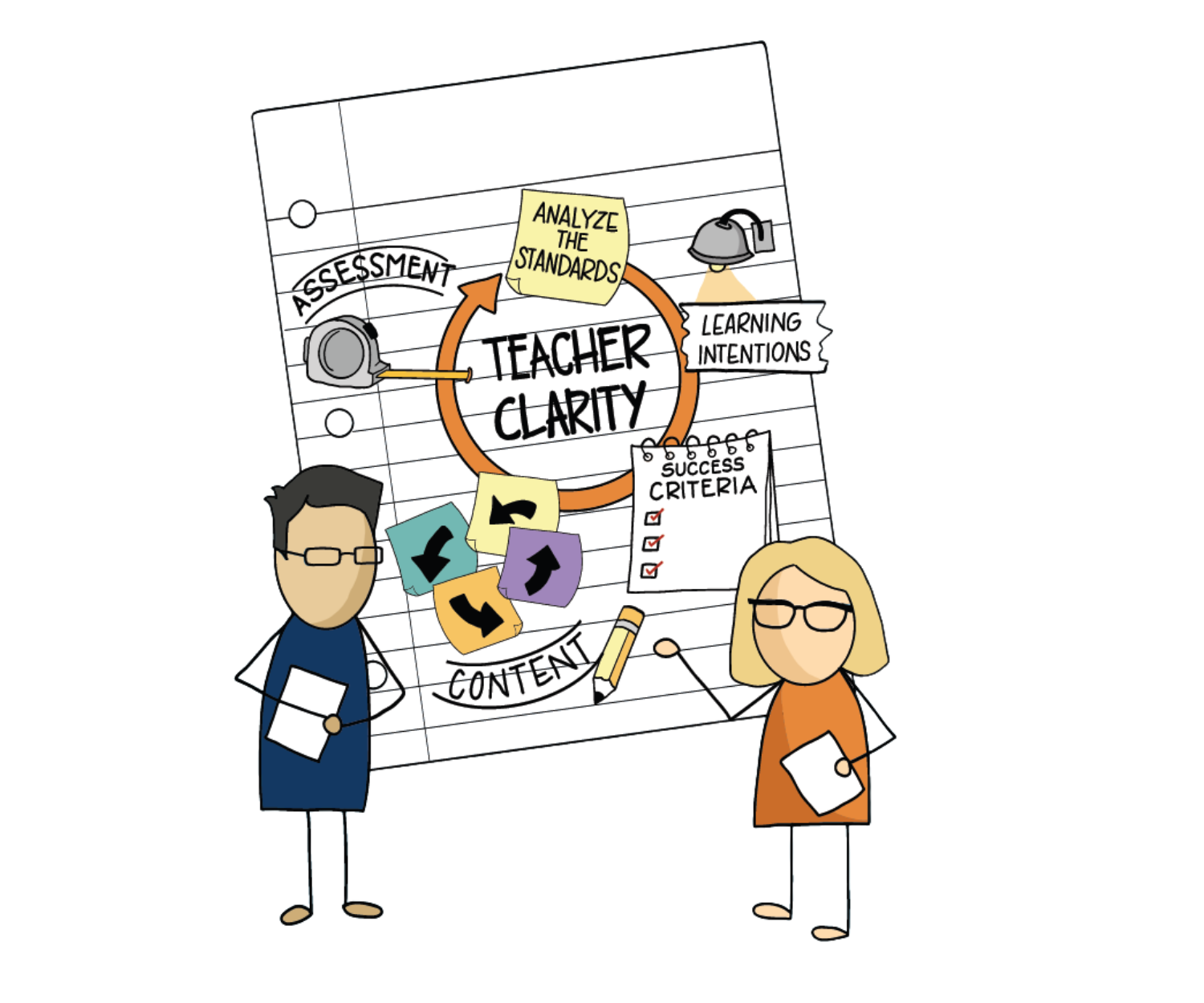
At its core, Teacher Clarity brings together several essential components: clearly defined learning intentions, meaningful success criteria, aligned assessment and feedback, and purposeful instructional sequencing. When these elements work in concert, students experience deeper learning and teachers gain greater instructional efficiency.
Teacher Clarity in Action
This teacher makes learning intentions visible, provides purposeful relevance, and helps students understand what success looks like.
Teacher Clarity is a daily practice that helps students understand where they’re going and how to get there. When teachers name the learning intention and unpack the success criteria, they create a shared purpose that anchors the lesson. These small, intentional moves support deeper learning and stronger student agency.
Why Teacher Clarity Matters
Teacher Clarity is one of the most impactful influences on student learning because it strengthens focus, deepens understanding, and creates a shared sense of purpose in the classroom. When learning intentions, success criteria, and assessments are clearly aligned, teachers make stronger instructional decisions and gather more meaningful evidence of learning.
Clarity also empowers students: they know what they’re working toward, how to monitor their progress, and what success looks like—building confidence, engagement, and agency.
Students talk about the importance of learning intentions and success criteria.
The Core Components of Teacher Clarity
Teacher Clarity is built on a set of interconnected components that help students understand the purpose of learning and how to be successful. When these elements work together, instruction becomes more focused, assessments become more meaningful, and students take greater ownership of their progress.
Learning Intentions
Learning intentions describe what students are expected to learn—not the activity they will complete. Clear intentions help teachers distinguish between tasks and learning goals and give students a strong sense of purpose. Across content areas, effective intentions focus on concepts, skills, or strategies rather than assignments or procedures.
Success Criteria
Success criteria make learning visible by showing students how they will know they’ve met the intention. When written in clear, student‑friendly language, success criteria guide self‑assessment, support peer feedback, and strengthen teacher feedback. They help students monitor their progress and understand what quality work looks like.
Organization of Content
Effective instructional design sequences learning in ways that build understanding over time. Modeling, guided practice, and opportunities for independent application help students move from initial exposure to confident use of new skills and concepts. This intentional progression—often described through the Gradual Release of Responsibility—supports deeper learning and greater student independence.
Assessment
Formative assessment is most powerful when it aligns directly with the learning intention and success criteria. Checking for understanding throughout a lesson provides real‑time evidence of student learning and helps teachers adjust instruction as needed. This alignment ensures that assessment is purposeful, actionable, and connected to the learning goals.

The Research Behind Teacher Clarity
Teacher Clarity is one of the most powerful influences on student achievement identified in Visible Learning research. John Hattie’s meta‑analyses report an effect size of 0.85 for Teacher Clarity—well above the 0.40 hinge point for a year’s worth of growth—indicating that clear learning intentions, aligned success criteria, and purposeful assessment practices significantly accelerate student learning. Additional research from Fisher and Frey demonstrates how clarity strengthens collective efficacy (effect size 1.36), as teams develop shared expectations for learning and consistent approaches to instruction.
Across decades of studies, the evidence is consistent: when students understand what they are learning, why it matters, and how to demonstrate success, they engage more deeply and achieve at higher levels. Teacher Clarity provides the structure and transparency that make this level of learning possible.
Continue Your Teacher Clarity Journey
Deepening your understanding of Teacher Clarity is an ongoing process, and we’ve gathered a range of resources to support you at every step. Explore the tools below to strengthen your practice, build shared expertise, and bring greater clarity to your classroom or school community.

Research-based guidance and instructional frameworks in our professional books
DailySpark: A 30-day microlearning experience
Support for schools and teams through our professional learning workshops